
The Security Of Our Salvation
According to the Reformed view, God is sovereign in our salvation. Although since the fall of Adam and Eve, every one of us has been born dead in our trespasses and sins and therefore totally unable to initiate the process of salvation, God has fore-loved us and marked us out to be His own.
He has placed us in Christ from before the creation of the world and has redeemed us through the work of Christ accomplished for our sake on Calvary’s cross.
Because of Christ’s completed work on our behalf, God, through His Holy Spirit, regenerates us so that we may be converted and respond in faith to the call of the Gospel.
This work is effective and will not fail now or ever. Therefore, the work that God has begun in us He will most certainly bring to completion.
This is why the Apostle Paul can say that
Because the work of salvation is the work of an almighty and faithful God, whose word will never fail, we can rest in the knowledge and the assurance that He will complete His work and that we will never lose our salvation.
He will preserve us in that salvation even as He causes us to persevere until the day our mortal bodies die and our immortal souls enter into His presence, where they will be reunited with our perfected resurrection bodies at the end of earth’s history.
This doctrine is known as the preservation or perseverance of the saints. Preservation and perseverance are two sides of the same coin. Preservation refers to God’s activity in bringing us to the final state of glorification.
He will most assuredly preserve us in our salvation. Perseverance refers to our Spirit-enabled activity. We will most certainly persevere until our final glorification.
The Heidelberg Catechism puts all this beautifully in its response to its first question, “What is thy only comfort in life and in death?”
Here is what it says:
That I, with body and soul, both in life and in death, am not my own but belong to my faithful Savior Jesus Christ, who with His precious blood has fully satisfied all my sins, and redeemed me from all the power of the devil, and so preserves me, that without the will of my Father in heaven not a hair can fall from my head; yea, that all things must work together for my salvation.
Wherefore, by His Holy Spirit, He also assures me of eternal life and makes me heartily willing and ready henceforth to live unto Him.
All the themes we have stressed are here. I “belong to my faithful Savior Jesus Christ.” Indeed, I have been placed in Him from before creation.
“He has fully satisfied for all my sins.” He has accomplished my salvation on Calvary’s cross, even as He has done so for all for whom He died. And He “preserves” me, for “all things must work together for my salvation.”
This is truly a wonderful source of comfort, one that, whether I am in the prime of life and in good health, or am hovering under the shadow of death, is grounds for full assurance in the power of my faithful Father to lead me to my eternal rest in Him.
The Arminian denies this. Though we may be greatly weakened by sin, we are not dead in our trespasses and sin. Therefore, we have the ability to respond to the Gospel apart from the antecedent work of the Holy Spirit in our lives.
God has elected and predestined us only in the sense that He foresaw the choice that we made prior to the new birth within us. Christ died to make salvation possible for all, and it is up to us to accept or reject it.
In light of all this, it is not surprising that most Arminians argue that we can lose our salvation. In this they are consistent.
For if we are sovereign in our choice, then it would seem that at any time we could opt out, and the same God who has merely acknowledged our free choice to trust in Christ and apply His work to us will continue His hands-off policy and will let us perish if we choose. This is hardly a comforting thought.
In all fairness, it must be acknowledged that some Arminians part company with their brethren when it comes to the matter of the security of our salvation.
Living with a happy inconsistency, they accept what they refer to as the eternal security of the believer, or, as it is sometimes put, “once saved, always saved.”
While this is an inconsistency, it at least provides a measure of comfort to those who otherwise would live their lives on this earth in fear of losing their salvation.
But perhaps the Reformed doctrine of the preservation of the elect in their salvation is mistaken after all. Perhaps God, having begun a good work in us through the Holy Spirit for the sake of Christ, who died for our sins, will not complete that work after all.
Perhaps Paul did not really have grounds for his confidence. What reason do we have to suppose that our heavenly Father will work all things for our salvation? By way of answer to this question, let’s see what Scripture says about the remaining steps in the order of salvation.
Justification
In the partial list of the steps in the order of salvation that Paul gives in Romans 8:29-30, we read that those God called, “he also justified.”
What is it to justify?
In the Greek text of the New Testament the word translated into English as “justify” is “dikaioo.” This word means “put in a right relationship with” or “declare and treat as righteous.” When God justifies us, He declares us righteous in His sight.
Unlike regeneration and conversion, which take place in us, justification occurs outside of us in the tribunal of God.
Justification is a judicial act of God, whereby He declares, on the basis of Christ’s perfect righteousness, that all the claims of the law are satisfied with respect to us.
We are justified in God’s sight because He removes our sins from our record and credits to us the perfect righteousness of Jesus Christ.
The Apostle Paul, quoting from Psalm 32:1-2, puts our justification in this way:
Or, as the Heidelberg Catechism says, in discussing my state of justification: “God, without any merit of mine, of mere grace, grants and imputes to me the perfect satisfaction, righteousness, and holiness of Christ, as if I had never committed nor had any sin, and had myself accomplished all the obedience which Christ has fulfilled for me” (60).
Justification includes first of all the remission of sins on the basis of the atoning work of Christ. Romans 5:19 points to this aspect, when it declares: “For just as through the disobedience of the one man the many were made sinners, so also through the obedience of the one man the many will be made righteous.”
Similarly, Romans 4:8, which we have just quoted, says, “Blessed is the man whose sin the Lord will never count against him.”
Justification also includes our adoption as children of God and the right to eternal life. In the prologue to John’s gospel we read, “To all who received him, to those who believed in his name, he gave the right to become children of God—children born not of natural descent, nor of human decision or a husband’s will, but born of God” (John 1:12-13).
Finally, justification cannot be found in our own virtue or good works. Our best works in this life are polluted by sin and our own righteousness remains imperfect.
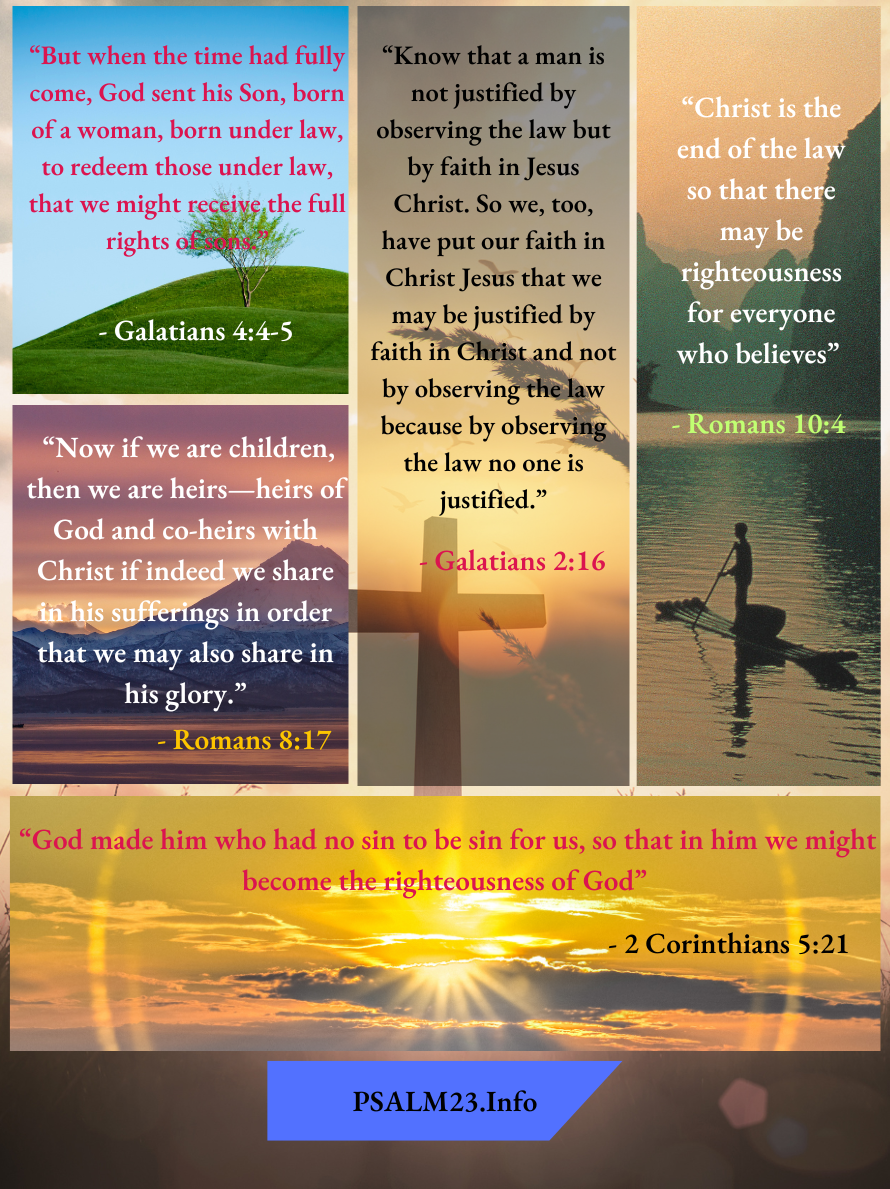
Only in Christ do we have the perfect righteousness that God demands and by which we are justified.
The relevance of this to the security of our salvation should be evident. Our justification does not depend on the strength of our faith or the righteousness of our works.
It is an act of God and depends on the perfect righteousness of Jesus Christ. Once we are justified, we are considered righteous, not because of our righteousness, but because of Christ’s righteousness.
That righteousness will never fail us nor will it ever be expunged from the record. Being justified, we now have the full rights as sons of God. And just as the Father will never disown His eternal and natural Son, He will never disown those who are sons by adoption. We may and will fail Him. He will never fail us.
Sanctification
The term “sanctification” derives from the Latin word “sanctus,” which means “holy.” The words in the Greek New Testament that convey the idea of sanctification are “hagiazo,” which means “to make holy,” “hagios,” which means “holy” or “morally pure,” and “hagiasmos,” which means “sanctification” or “holiness.”
The sanctification of believers is a continuous process whereby through the operation of the Holy Spirit they are more and more cleansed from the pollution of sin, renewed in their whole nature in the image of God, and enabled to do what is pleasing in God’s sight.
Sanctification consists of three aspects—definitive, progressive, and final sanctification. We are definitively sanctified at the time of our conversion and justification in that we are set apart as holy unto God.
We are numbered among the saints, the saints being all those whom God has called to be His own. (Like “sanctification,” the word “saint” derives from the word “sanctus.”)
We are progressively sanctified throughout our lives as God continues to work in us through His Holy Spirit to more and more conform us to His image. We are finally sanctified when, upon death, this body of sin is destroyed and we enter into the immediate presence of God.
Sanctification is a supernatural work of the triune God. However, it is especially the work of the Holy Spirit. As Peter says concerning the elect, they (1 Peter 1:2).
Sanctification manifests itself in progressively greater obedience to the commands of God and in the exhibition of the fruit of the Spirit, which, as Paul notes in Galatians 5:22-23
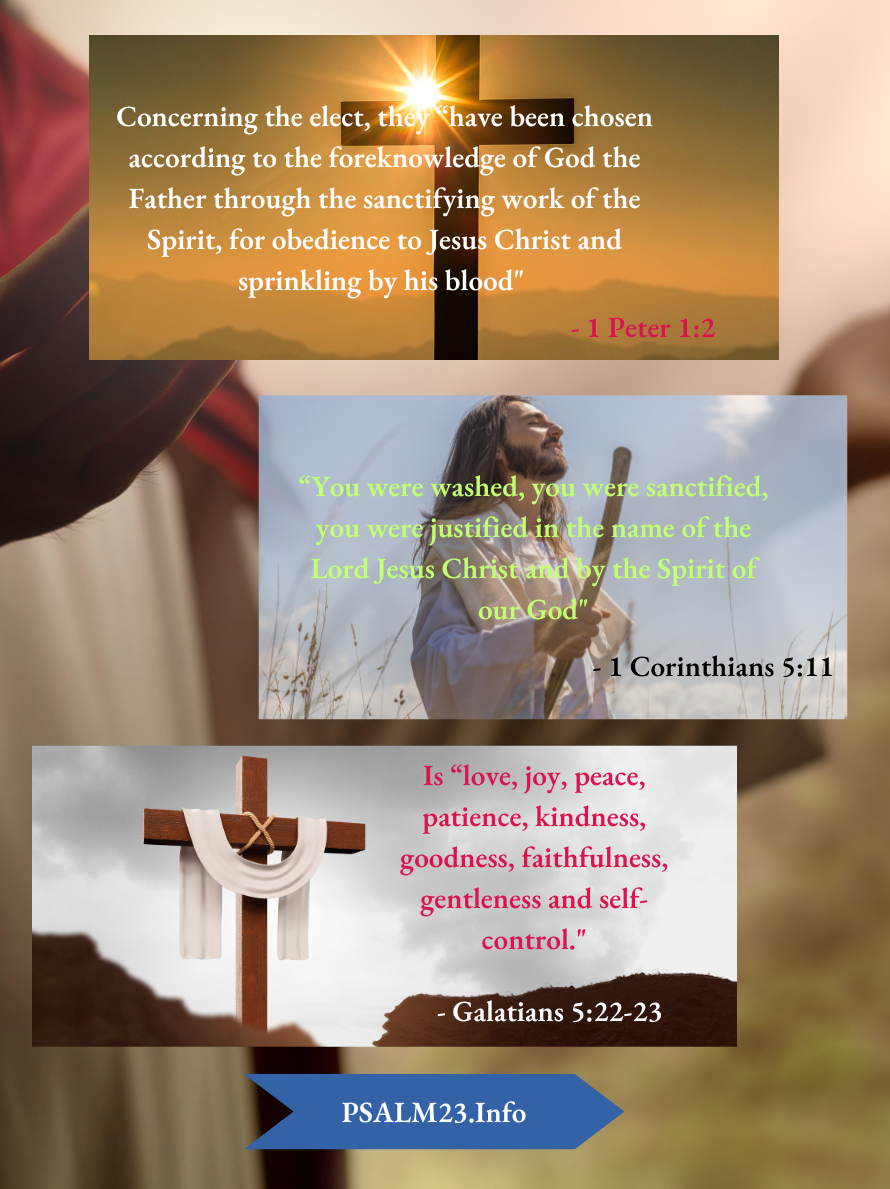
If our growth in obedience were dependent on our own strength, we would rightly fear for our salvation. But it is not. As these (and other passages make clear), our sanctification is the work of the Holy Spirit.
Just as we were chosen in Christ from before the creation of the world, just as God fore-loved us and marked us out from all eternity to be His own, just as Christ died to accomplish our salvation, so too the Holy Spirit, who applies Christ’s salvation to us through our salvation, will continue the work of our sanctification until it is completed when we are glorified.
In Colossians 3:1-3 we read the following: “Since, then, you have been raised with Christ, set your hearts on things above, where Christ is seated at the right hand of God. Set your minds on things above, not on earthly things, For you died, and your life is now hidden with Christ in God.”
What is so interesting about what Paul says in this passage is that he begins by pointing to our standing—we have been raised with Christ. This echoes what he writes in Ephesians 2:6: “And God raised us up with Christ and seated us with him in the heavenly realms in Christ Jesus.”
Our being raised up with Christ is an accomplished fact. We are already seated with Him in the heavenly realms.
This is what we are in principle. And this is what we should become in practice. In the Colossians passage, Paul goes on to say, “Put to death, therefore, whatever belongs to your earthly nature: sexual immorality, impurity, lust, evil desires, and greed, which is idolatry” (3:5).
What is most significant about this comment is that Paul assumes that because in principle we are already reigning with Christ in the heavenly realms, we have the power through the Holy Spirit to obey.
Even though we often fall far short and continue to sin, we are no longer defined by that sin. Therefore, we now have the Spirit-enabled power to become in practice what we are in principle.
Looking further in this passage we read, “Do not lie to each other, since you have taken off your old self with its practices and have put on the new self, which is being renewed in knowledge in the image of its Creator” (vv. 9-10).
And again, “Therefore, as God’s chosen people, holy and dearly loved, clothe yourselves with compassion, kindness, humility, gentleness and patience” (v. 12).
We have taken off the old self. We are God’s chosen people. Even though we do not measure up perfectly in this life (remember: sanctification is progressive throughout our lives), in principle we are righteous, holy, set apart from sin, and reigning with Christ.
Because from the time of our regeneration, we possess the Holy Spirit, we do not have to fear losing that salvation. The Holy Spirit, Who dwells in us, will never be taken from us. We will sin. Indeed, we will sin until the day of our glorification.
But the Holy Spirit will continue to work in us to turn us more and more from our sin and to cause us to abhor it more and more as well. Indeed, the One who has begun a good work in us will bring it to completion.
Just as we were chosen by the Father in Christ from before creation, just as Christ accomplished our salvation, just as the Holy Spirit made us alive, so the Triune God will preserve us and will cause us to persevere in our salvation to the end.
Glorification
We come now to the final stage and culmination of the order of salvation—glorification.

The Bible makes clear that this life is not all that there is, that at the end of this life, those whose trust is in Christ for their salvation will enter a realm of great glory, one that is so wonderful that we cannot even begin to comprehend it while we are living on this earth.
It is the hope of this future realm that sustains us and causes us to endure our present trials and sufferings. As Paul puts it: “Now if we are children, then we are heirs—heirs of God and co-heirs with Christ, if indeed we share in his sufferings in order that we may also share in his glory” (Romans 8:17).
Paul goes on to say, “I consider that our present sufferings are not worth comparing with the glory that will be revealed in us” (v. 18).
Although Scripture gives us only the barest glimpse into this realm that awaits us, we know this much for sure: We will be in the presence of Christ and we will be clothed in glorified bodies. In Philippians 3:20-21 Paul writes, “Our citizenship is in heaven.
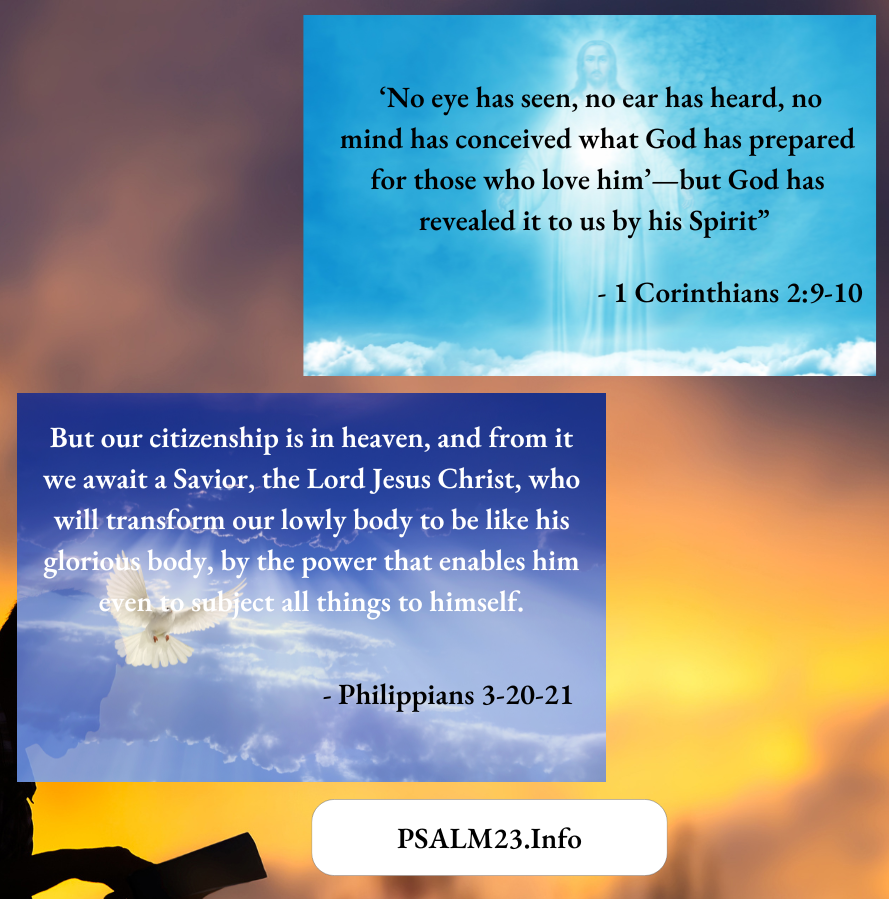
And we eagerly await a Savior from there, the Lord Jesus Christ, who, by the power that enables him to bring everything under his control, will transform our lowly bodies so that they will be like his glorious body.”
First Corinthians 15, the great chapter that speaks throughout of our resurrection, tells us, “So it will be with the resurrection of the dead. The body that is sown is perishable, it is raised imperishable.
It is sown in dishonor, it is raised in glory; it is sown in weakness, it is raised in power; it is sown a natural body, it is raised a spiritual body” (v. 42-44).
Several verses further in this chapter reach its climax: “Listen, I tell you a mystery: We will not all sleep, but we will all be changed—in a flash, in the twinkling of an eye, at the last trumpet.
For the trumpet will sound, the dead will be raised imperishable, and we will be changed. The perishable must clothe itself with the imperishable, and the mortal with immortality.
When the perishable has been clothed with the imperishable, and the mortal with immortality, then the saying that is written will come true: ‘Death has been swallowed up in victory’” (vv. 51-54).
Not only this but creation itself will be transformed: “The creation waits in eager expectation for the sons of God to be revealed.
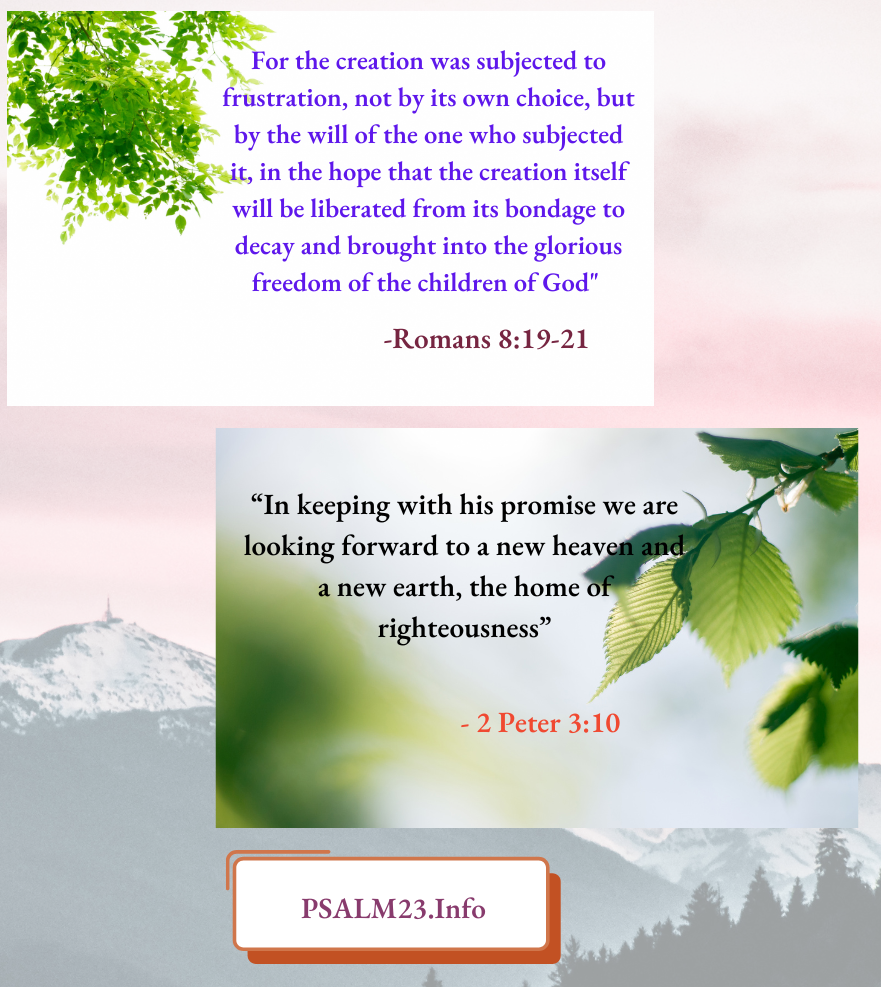
What a wonderful reality is presented in the Bible. Those who are in Christ will be glorified.
But what guarantee do we have that we who are saved will most certainly reach this final state of great and unfathomable bliss? And the answer is, “None—if at any point we must depend on our own efforts for our perseverance in our salvation.”
For most certainly, given our own frailty, we would surely fall short, and we would fail to attain that for which we are striving. As Martin Luther puts it in his familiar song, “A Mighty Fortress,” “Did we in our own strength confide, our striving would be losing.”
However, this verse does not end here. Its next words are, “Were not the right Man on our side, the Man of God’s own choosing. Dost asks who that may be. Christ
Jesus, it is he, Lord Sabaoth, his Name, from age to age the same, and he must win the battle.”
We are not dependent on our own efforts “to win the prize for which God has called [us] heavenward in Christ Jesus” (Philippians 3:14). God has guaranteed it.
Let us remind ourselves one more time that God has placed us in Christ from before the creation of the world. He has eternally loved us and has marked us out for salvation.
He has sent His Son to make full atonement for our sins at Calvary. That completed work has been applied by the Holy Spirit, who has made us alive, has united us to Christ, has sanctified, is sanctifying, and will sanctify us, and is preserving us in the salvation that Christ has won for us.
The triune God will never let us go.
He will be with us every step of the way. He will most certainly lead us to glory. Salvation is forever.
Preservation and perseverance
Having discussed the stages in the order of salvation as they bear on the question of the security of the believer, let us now look at some of the relevant passages of Scripture.
We will begin with a passage that we have already quoted, but which bears repeating: “For those God foreknew he also predestined to be conformed to the likeness of his Son, that he might be the firstborn among many brothers.
And those he predestined, he also called; those he called, he also justified; those he justified, he also glorified” (Romans 8:29-30).
The progression from our predestination and our internal calling, through our justification, to our glorification is inevitable. At no point does the Apostle Paul indicate that the chain could be broken.
He does not say, for instance, those He called, He might possibly glorify. No. The entire process is regarded as accomplished. If we have been chosen in Christ from before the creation of the world, we will be glorified.
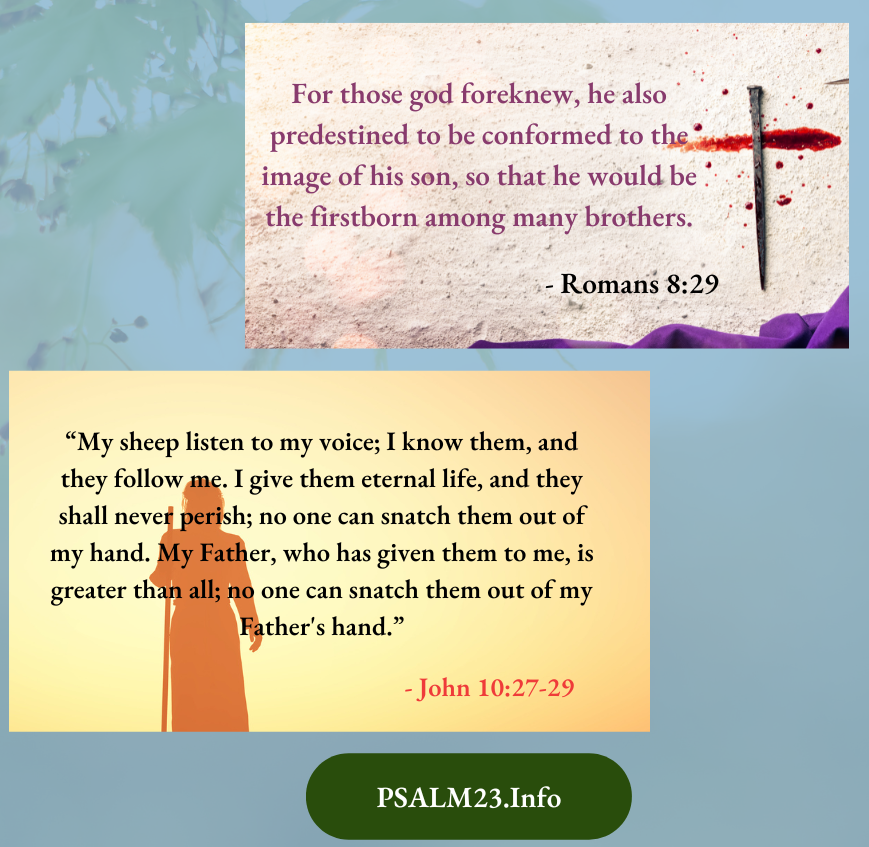
According to Jesus, our sovereign God Himself ensures our perseverance.
Let us again remind ourselves that in Philippians 1:6 Paul writes that he is “confident of this, that he who began a good work in you will carry it on to completion until the day of Christ Jesus.”
The Apostle Paul is confident. Based on the promises of Scripture and all that we know about the process of salvation, we should be too.
Finally, in 2 Timothy 1:12 Paul tells us, “I know whom I have believed, and am convinced that he is able to guard what I have entrusted to him for that day.” Paul trusts Christ (not himself, by the way) to guard and protect him in his salvation.
In addition to these direct statements of Scripture, we may infer the doctrine of preservation and perseverance from the various aspects of salvation.
As we have already seen, the price paid by Christ once and for all on Calvary’s cross is sufficient for our eternal salvation. Therefore, it is impossible that those who have been justified by the payment of the perfect atoning work of Christ will ever fall under condemnation.
Moreover, Christ’s intercession for His people is constant and unceasing. The author of Hebrews writes, “Therefore he is able to save completely those who come to God through him because he always lives to intercede for them” (7:25).
Because Christ’s intercession is continuous until the end of the earth’s history, we can have confidence that no one will separate us from God’s love.
Finally, we have these words of Jesus: “Whoever hears my word and believes him who sent me has eternal life and will not be condemned; he has crossed over from death to life” (John 5:24). Here too we have a categorical statement. Jesus does not say “possibly.”
He says that if we believe in Him and in His Father, we will not be condemned. Again Jesus says, “Whoever eats my flesh and drinks my blood has eternal life, and I will raise him up at the last day” (John 6:54).
Once again, it is a categorical statement that clearly teaches that the salvation of those who are in Him is assured.
Objections
Even some Arminians believe in the doctrine of the eternal security of the believer. However, not all do. Why not?
One common objection is that belief in this doctrine leads to indifference when it comes to obedience to the commands of God. After all, if I know that I am going to heaven, what incentive do I have to do what is pleasing in God’s sight?
Why can’t my attitude be that of the old saying: “Free from the law, O blessed condition, I can sin all I want and still have remission”?
The Heidelberg Catechism, when discussing the doctrine of salvation by grace through faith alone without any merit on our part asks, “But does not this doctrine make men careless and profane?” Its answer is, “No, for it is impossible that those who are implanted into Christ by true faith, should not bring forth fruits of thankfulness” (64).
The doctrine of the preservation and perseverance of the saints should provide the comfort that if we do sin we do not need to worry about losing our salvation.
If anyone does sin, we have one who speaks to the Father in our defense—Jesus Christ, the Righteous One”. Christ’s righteousness credited to us is what saves us.
It is what justifies us in God’s sight. Our righteous works will not and cannot save us. Conversely, our sin cannot cause us to lose our salvation.
At the same time, if we have been made alive by the Holy Spirit, then we will not be indifferent to our sins.
True repentance, which will inevitably come about if we are new creations in Christ, will, as the Heidelberg Catechism says, lead to “heartfelt sorrow for sin, causing us to hate and turn from it always more and more” (89).
If we sin and truly repent of our sin, we should thank God that He has given us new hearts that are tender to Him and seek to serve Him faithfully, and we should rejoice, knowing that we are secure in our salvation. If we sin and are utterly indifferent to our sin, we should question whether we have even been born again of the Spirit.
Either we are sinners saved by grace or we are reprobates who have experienced a false conversion. Either we have inherited a salvation that will last forever or we are not saved at all. Either way, we cannot lose our salvation.
But, it may be asked, what about those passages that seemingly teach that it is possible for us to lose our salvation? For example,
We must interpret these passages in light of the fact that it is quite possible to make a false profession of faith. Not all who claim to follow Christ have undergone a genuine transformation.
If a person deliberately goes on sinning or if someone falls away from the faith, this is not sufficient to show that this person has lost his salvation. Rather, in light of the assurance of salvation that Scripture gives to those who are truly saved, we must conclude that such a person has never been genuinely saved at any time.
What about the specific cases of apostasy mentioned in Scripture, particularly those Paul notes in 2 Timothy? For example, Hymenaeus and Philetus are said to “have wandered away from the truth” (2 Timothy 2:17-18).
Later on in the same letter (4:10), Paul writes, “Demas, because he loved this world, has deserted me and has gone to Thessalonica.” Once again, unless it can be proved that the conversion of the aforementioned individuals to the faith was genuine (which it cannot be), we must let the overwhelming testimony of Scripture speak for itself.
Those whom God has elected from before the foundation of the world and for whom Christ has shed His blood, those whom God has regenerated and called through His Holy Spirit, those whom He has justified, He will most certainly glorify. He will preserve the saints for all eternity.